

Welcome to WONKSTACK.
The main political voices don’t reflect the wider nation; the country aligns more with the values of Teddy Roosevelt than either party admits.
I’m launching WONKSTACK because, in 2026, it is no longer possible to summarize American politics accurately with a simple phrase.
The political spectrum is still seen as a straight line: the far left, the center, and the far right. This view encourages division rather than understanding.
That map is wrong.
Today’s leading political parties are not the traditional left or right. Rather, they consist of two groups, each backed by funding and media algorithms, which have pulled the extremes even further apart and ignored the middle ground. One concentrates on identity politics, while the other concentrates on personality and donor interests. Both parties make use of the working majority for their own purposes.
The people call those in the genuine American middle class radicals.
I call this about-faceentrism.
Radical centrism isn’t about compromise for its own sake or avoiding offense; in my definition, it means the following:
The prevailing opinion, one that focuses on working people and the middle class, opposes unfair systems, and rejects divisive strategies—is now seen as extreme by both major political groups.
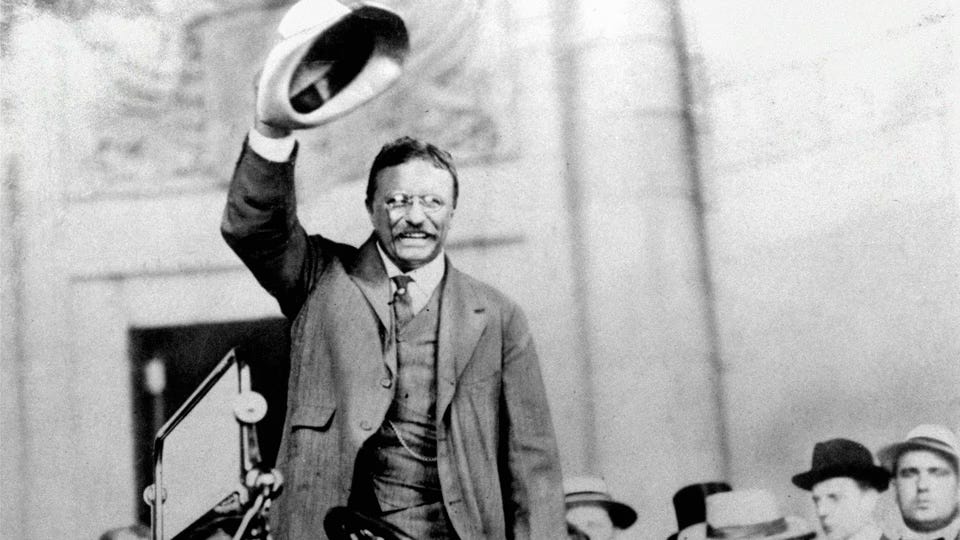
If it seems familiar, it should. Theodore Roosevelt used that tactic more than a hundred years ago and called it a Square Deal.
Defining “radical” in this context
The term “radical” in this context doesn’t imply extremism or inflexible standards; rather, it means tackling problems at their source.
The main problem is not a hidden desire for extreme ideologies. Rather, many voters have noticed that both parties put special interests before their communities and future, and use culture wars to divert attention.
As I have stated previously on X, and will reiterate here:
Extremism is to be found in both parties. Say that out loud.
Oligarchs make donations to and influence policy-making in both cases. Say that too.
We will not agree on all issues, nor will we disagree on all of them. The existing political system prevents this kind of nuance from being acknowledged.
Political experts frequently regard support for policies such as Medicare for All, higher taxes on the wealthy, and ending foreign wars as merely exceptional. In fact, this shows that the groups referred to as the ‘base’ or the ‘left’ usually share similar material interests. The divisions that are promoted are generally distractions meant to aid fundraising.
That is why I call it radical centrism rather than moderation; nowadays, moderation usually means preserving the status quo, and Roosevelt made it clear that the Square Deal was different.
By saying that I am in favor of the Square Deal, I do not merely mean that I support fair play within the present rules of the game, but that I am in favor of altering those rules to secure greater equality of opportunity and greater equality of reward for equally good service. Fair play is ineffective when the rules are unfair, and altering the rules so that work is rewarded aligns with a fundamental American tradition that is frequently ignored. Roosevelt’s three C’s were not on the left or the right; they stood for the public interest.
Historians compress the Square Deal into three C’s:
Control of corporations
Consumer protection
Conservation
Take these principles out of the Progressive Era; they remain the same.
Regarding the control of corporations, Roosevelt did not oppose business as such, but he did oppose the idea of powerful interests determining laws for the public. Although he believed economic combinations were inevitable, he thought the public should watch them rather than be controlled by them. The aim of breaking up trusts was to ensure the government remained accountable to citizens, not corporations.
In today’s context, private equity is harming communities, pharmaceutical companies are setting and colluding to keep prices high, technology firms are controlling public discourse and working with the federal government to censor and monitor speech, and, of course, undisclosed money affects both sides. To address these problems, we don’t need to fix the economy; we need a government that can curb excessive influence and establish those protections.
Consumer protection—the problems pointed out in The Jungle were genuine and serious, and as a result, the Meat Inspection Act and the Pure Food and Drug Act were passed. These laws prevented sellers from putting consumers in danger and then treating that as a form of freedom.
In today’s terms, this means treating housing as an investment rather than as a place to live, charging excessive fees, engaging in predatory medical billing, causing volatile food and energy prices through speculation, and taking advantage of personal data; the Square Deal maintains that consumers have a right to fair treatment.
Conservation—Roosevelt set aside 230 million acres of forest land, refuges, and parks because a country should not give up its natural resources for temporary benefit.
In practice, this means protecting fisheries, working waterfronts, public lands, water resources, and infrastructure. Stewardship should be regarded as a way of life, not merely as an abstract idea. A nation that cannot preserve both its industries and its environment has no credibility.
What matters is that, to support affordable healthcare, housing, or environmental protection, you don’t need to accept all of a particular group’s beliefs.
The fact that there is no such thing is deliberate, which is why both main groups oppose this method. One backs economic reform only if it comes with its cultural program, while the other changes the subject when economic issues arise and threaten its interests.
Roosevelt used the power of the nation to advance the public interest, without assuming labor was always right or capital always wrong. He got involved in the 1902 coal strike and opposed monopolies to ensure the country met the needs of its citizens.
It is progressive in the conventional sense because the government acts as an impartial referee for the majority rather than as an advocate for any one group.
Why the middle had to become “radical”
Centrism has acquired a bad image because, for many years, it has generally served donors’ interests, accepted unbalanced trade agreements, caused constant conflicts, allowed finance to go unchecked, and been involved in divisive culture wars.
That method is centralism, not the same.
Everyday issues still form the heart of American life: affordable housing, access to healthcare, education without excessive debt, stable jobs, secure infrastructure, responsible resource use, and the fight against corruption.
Most voters back these policies unless they are tied to any party; they seem “radical” only when political extremists treat loyalty as normal.
If the political spectrum is to be depicted, it now looks like a vise: on one side, justice is talked about while failing institutions are protected; on the other, the working class is said to be supported, but private interests are advanced. People looking for fairness end up in the middle.
Both sides frequently criticize the middle group, yet challenging a defective system is just what responsible citizens should do.
What WONKSTACK is for
It is not a newsletter that presents both sides, and it is not a political party organ.
WONKSTACK exists to do the unfashionable work:
Identify any undue influence—no matter what the source may be: money, the media, consultants, or platforms- regardless of one’s political affiliation.
We should examine a policy on its core rather than merely how it is presented. If a policy benefits only a small number of people even though it claims to be populist, we will point it out. Similarly, if a program is described as radical simply because it opposes monopolies, we will address that issue too.
We should consider the middle-class view; blue-collar workers are not political symbols. They are ordinary people dealing with real problems.
It is important to keep a point of view rooted in Maine; unlike those involved in politics, a local community’s outlook is worth having.
Economic populism is now in the middle of politics. For a long time, the working class has known that both parties are to blame for unfair policies, and they want to be listened to, understood, and given evidence, not drawn into partisan disputes.
WONKSTACK provides the detailed discussion that short online posts cannot.
The Square Deal
The Square Deal offered neither an easy life nor the idea that only people in power should set the rules.
A century later, the trusts have new names, and the muckraking arrives as a screenshot, but the assignment has not changed:
Take control of the companies that have grown beyond the citizen.
Keep consumers from being exploited.
Once something has been lost, we MUST preserve it.
One does not need to belong to any faction to serve working people; what is needed instead is the courage to act with integrity.
Although both extremes might still regard this method as radical, the middle ground has always been where most Americans actually lie.
What is new is that holding this view now requires more courage than simply choosing a side.
Here is the mission. That’s WONKSTACK.
— Maine
Radical Centrist. Policy Wonk. Blue Collar Advocate.
🫎🇺🇸🦞
Find Me on X: TheMaineWonk
TR was considered to be a leftist by most conservatives. It’s why Taft resisted him, successfully, in 1912
Enjoyed your piece.
I would add that the term “centrism” is misinterpreted, frequently intentionally.
If the right wing calls to deport all immigrants ànd thé left wing calls to confiscate thé wealth of all billionaires, the centrist position is not do both or do neither or do half of each.
It is that both immigration and inequality must be addressed with impartiality, pragmatism and consideration of all consequences, not with any ideological dogma. That's all. Centrism = rejection of any ideological monopoly.